What Is Industrial Real Estate? A Strategic Investor’s Primer for Vietnam
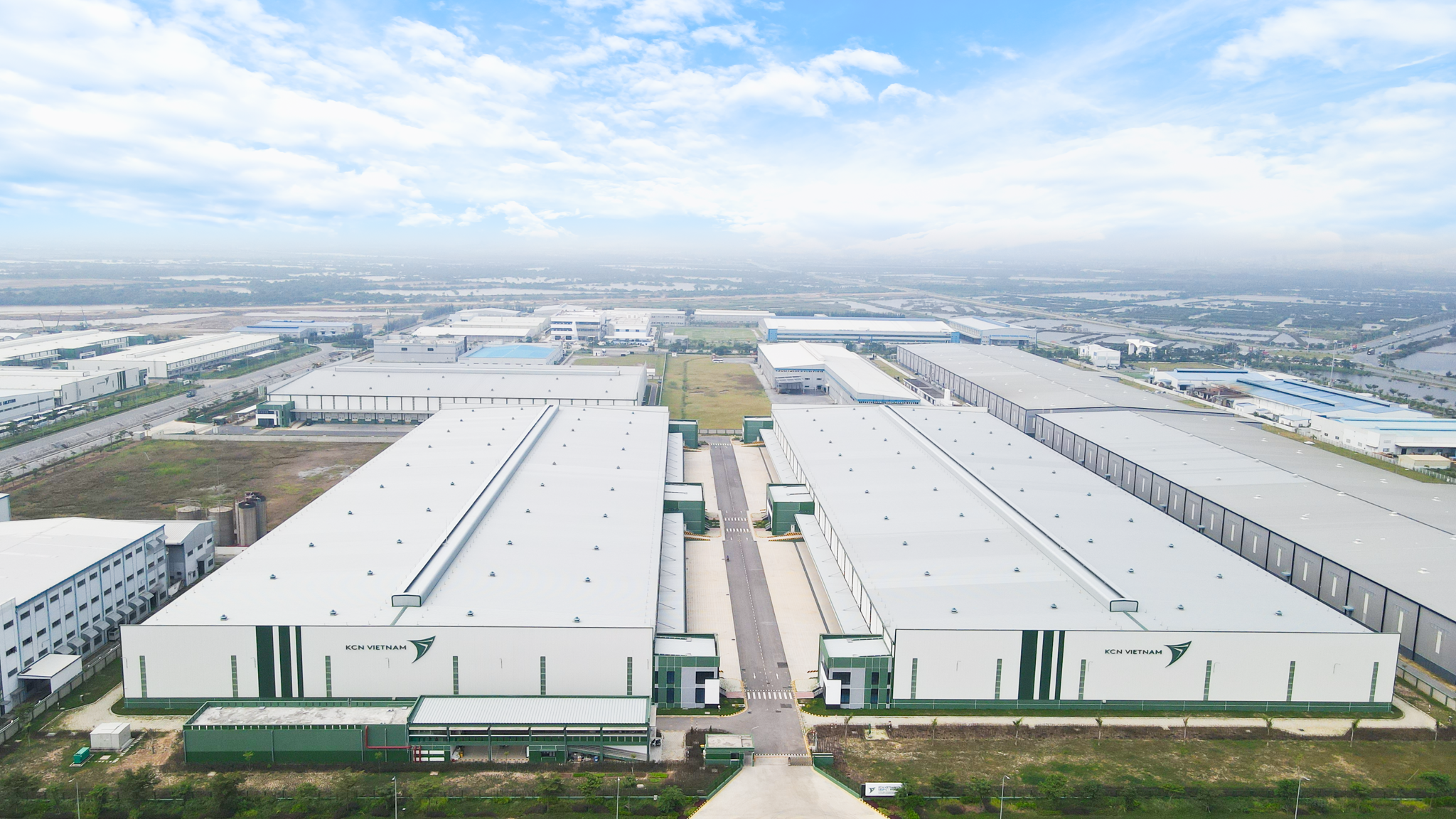
Industrial Real Estate (IRE) is often generalized as mere brick, mortar, and concrete. In reality, it serves as the physical backbone of the global supply chain. In the 2026 macroeconomic landscape, accelerated by e-commerce expansion, manufacturing re-shoring, and global supply chain diversification, IRE has emerged as one of the highest-performing property asset classes in the world.
Navigating industrial real estate requires looking past basic square footage. To maximize returns, strategic investors must understand how distinct asset classes, technical engineering specifications, and regional zoning regulations directly dictate manufacturing and logistics output.
1. Core Categories of Industrial Real Estate
Industrial real estate is not a monolith. It is categorized into specialized sub-sectors designed to serve specific operational needs:
- Manufacturing Facilities: These range from heavy industrial plants equipped with specialized power infrastructure to light assembly layouts. They also include highly controlled cleanrooms designed specifically for precision sectors like semiconductors, electronics, and pharmaceuticals.
- Logistics & Distribution Warehouses: These structures are the engines of fulfillment. They include massive regional distribution centers, e-commerce fulfillment hubs, and cold-storage facilities equipped with advanced thermal insulation for food, beverage, and chemical storage.
- Flex/Hybrid Spaces: A rising trend in modern industrial parks, these layouts blend corporate office administration with light production, research and development (R&D) laboratories, or industrial showrooms.
2. Technical Engineering Specifications That Matter
When evaluating an industrial property, standard real estate metrics fail. Smart operators evaluate an asset based on its structural engineering specifications:
The “Cubic Meter” Paradigm (Clear Height)
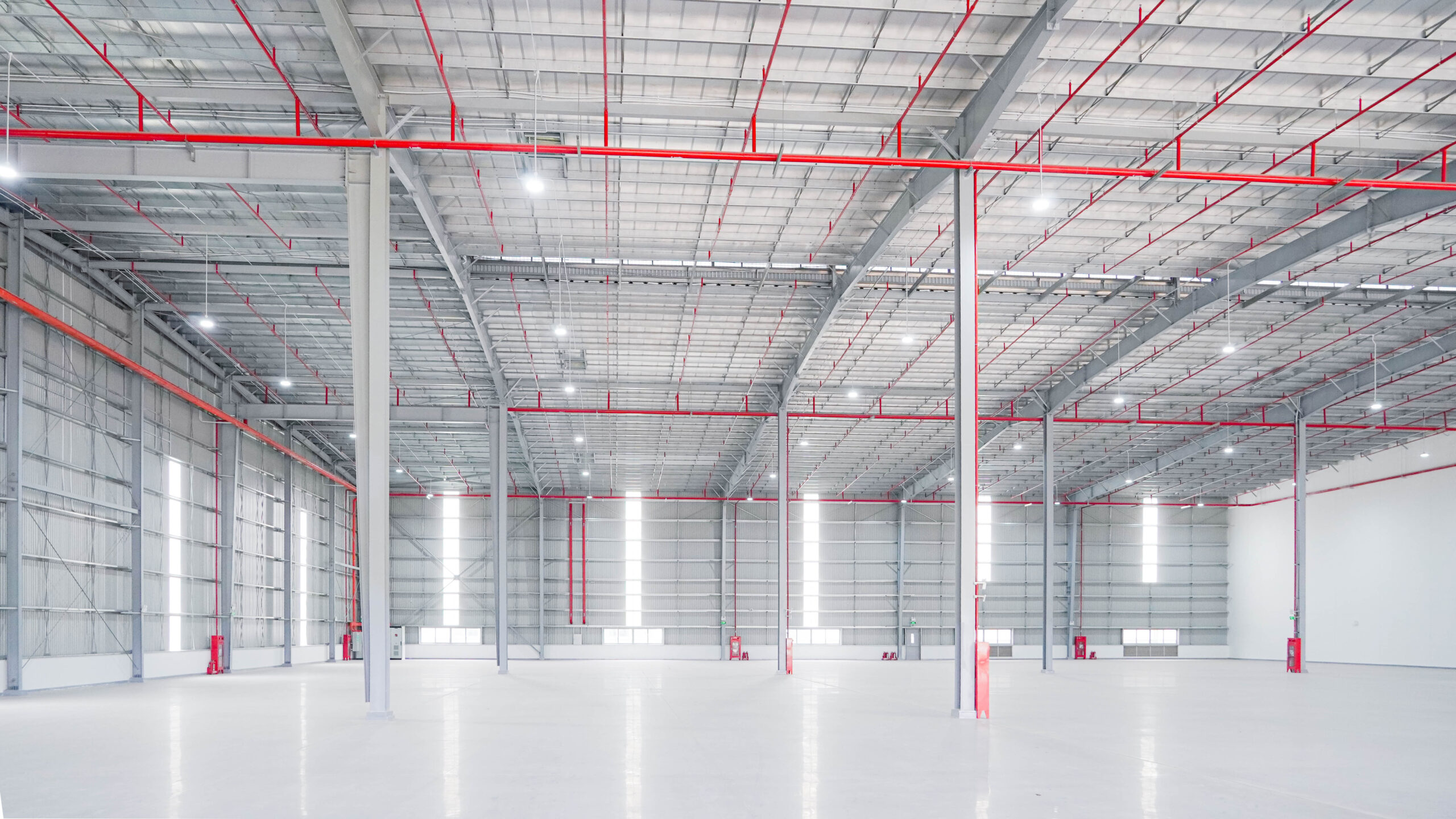
Sophisticated operators have stopped evaluating properties purely by square meters ($m^2$) and instead look at cubic meters ($m^3$). Vertical clearance – specifically a clear height ranging from 9 to 10.5 meters – is the true measure of an asset’s capacity. Higher ceilings allow for vertical racking optimization, enabling tenants to multiply their storage capacity within the exact same footprint, yielding massive cost savings.
Floor Load Capacity
Industrial floors must withstand immense, continuous pressure. Premium facilities require engineering standards of 2 to 3 tons per square meter. This heavy-duty reinforcement prevents structural cracking over time under the weight of high-density racking, heavy machinery, and constant forklift traffic.
Column Spacing & Grid Layouts
The wider the distance between structural columns, the more flexible a factory floor becomes. Optimized column grids maximize forklift maneuverability and allow production managers to configure assembly lines with minimal spatial obstruction.
Loading Docks & Dock Levelers
Loading docks are the gatekeepers of supply chain velocity. A premium facility must feature an adequate ratio of raised loading docks equipped with hydraulic dock levelers, ensuring smooth, rapid inbound and outbound movement of container trucks.
3. Market Strategy: Raw Land vs. Ready-Built Assets
For enterprises expanding into Vietnam, choosing between leasing raw land (Greenfield investment) or utilizing Ready-Built assets is a critical crossroads:
| Asset Strategy | Land Lease (Greenfield) | Ready-Built Assets (RBF/RBW) |
| Capital Outlay | High upfront CapEx (Design & Construction) | Predictable, low initial CapEx (Monthly Lease) |
| Time-to-Market | Slow (12–18 months for permits & build) | Immediate (Weeks to operational setup) |
| Operational Focus | Tenant handles all long-term maintenance | Developer handles master facility management |
| Regulatory Risk | Complex zoning and environmental approvals | Pre-certified fire safety and zoning compliance |
4. Crucial Evaluation Factors for Site Selection
Beyond the structure itself, successful site selection depends on three external variables:
- Strategic Radial Location: A facility must sit within primary transport corridors, providing direct access to expressways, international airports, and deep-sea ports to minimize daily container drayage costs.
- Utility Infrastructure: Heavy automation requires immense power stability. Properties must offer access to reliable high-voltage power substations and centralized wastewater treatment capacities that satisfy modern ESG standards.
- Zoning Alignment: Investors must ensure the property’s legal zoning fits their exact industry classification. Operating a light electronic assembly line requires vastly different environmental licensing than heavy chemical processing.
5. De-risking the Permit Labyrinth with KCN Vietnam
For foreign investors entering Vietnam, navigating the complex maze of local environmental impact assessments and stringent fire safety regulations can be a major bottleneck. Substandard spaces often face costly retroactive upgrade liabilities or lengthy operational delays.
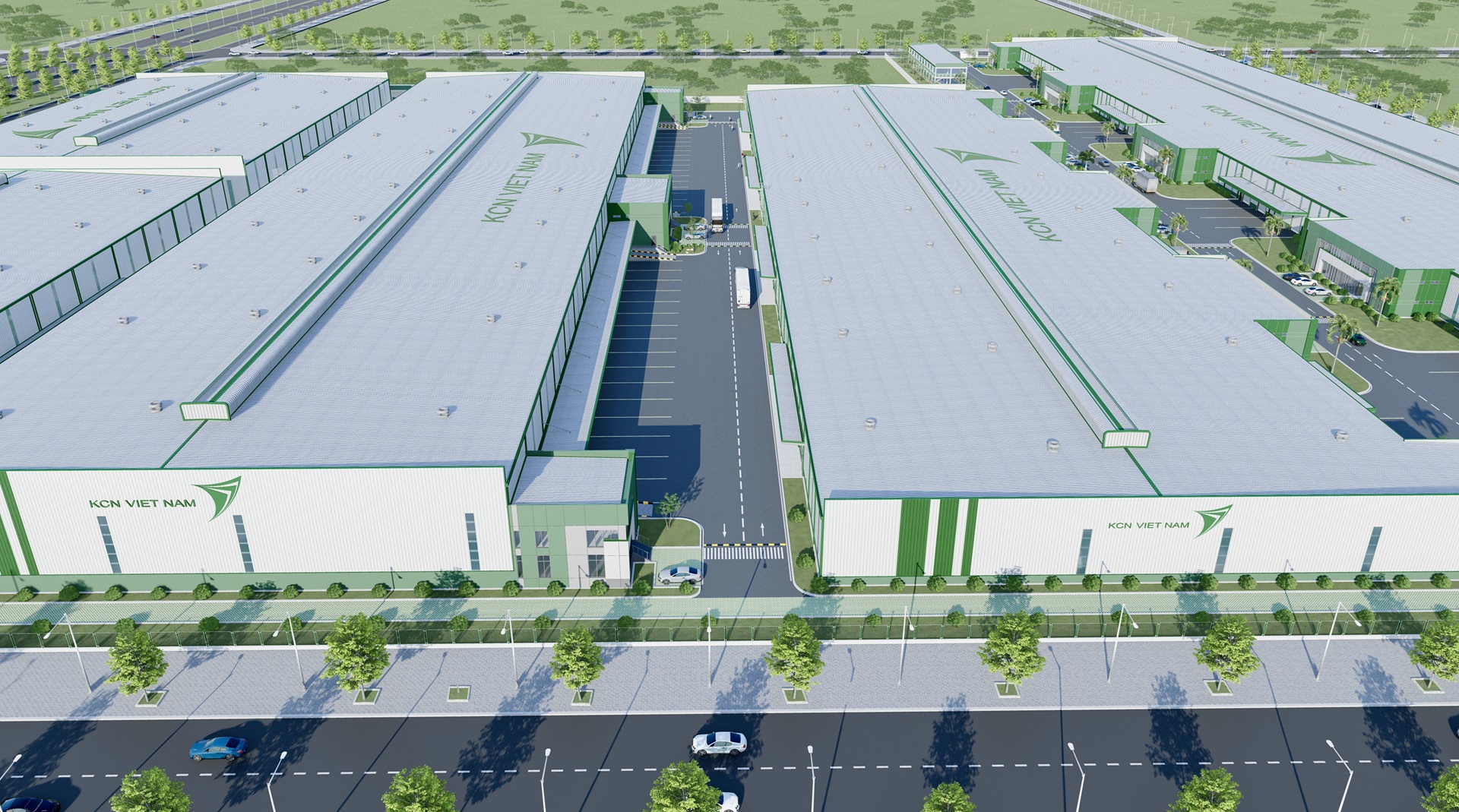
KCN Vietnam de-risks this process entirely by delivering premium, high-specification Ready-Built Factories (RBF), Ready-Built Warehouses (RBW), and tailored Built-to-Suit (BTS) industrial solutions.
Our assets act as an insurance policy against regulatory delays. Built from the ground up to meet strict global compliance standards, our facilities feature pre-certified international fire protection systems, and high-capacity floor loads. Furthermore, our local teams provide comprehensive administrative and licensing support, handing you the keys to an operationally ready, ESG-compliant facility from day one.
Conclusion
Industrial real estate is far more than an operational overhead expense – it is a strategic lever that can optimize your entire supply chain, lower your total cost of ownership, and protect your margins.
Ready to accelerate your expansion with an infrastructure audit? Contact KCN Vietnam today to explore our premium industrial portfolio across Vietnam’s primary economic corridors and discover how our high-spec assets can empower your long-term growth.
KCN MANAGEMENT AND SERVICES JSC
HEADQUARTER
Level 10 – Saigon View,
117 Nguyen Cuu Van, Gia Dinh Ward,
Ho Chi Minh City, Vietnam
HANOI OFFICE
Suite 1812 – Charmvit Tower,
117 Tran Duy Hung, Yen Hoa Ward,
Hanoi, Vietnam
Hotline: 1900 0089
Tel: +84 28 7777 0089