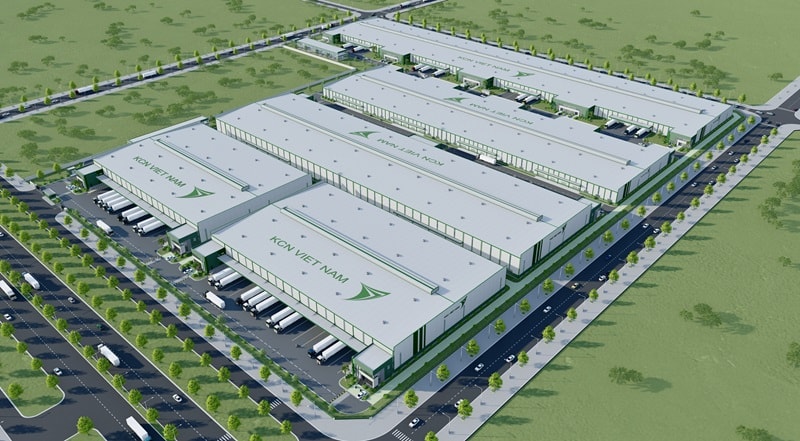
Vietnam Industrial Park Market Trends: A 2026 Shift Towards High-Spec & Green Logistics
Vietnam’s industrial property sector is undergoing a massive structural transformation. Moving far beyond its historical reputation as a low-cost, labor-intensive manufacturing destination, the country is rapidly emerging as a high-value, technology-driven supply chain ecosystem.
Driven by sustained Foreign Direct Investment (FDI) inflows, global “China+1” diversification strategies, and major domestic infrastructure upgrades, the industrial market is demanding a completely new standard of engineering and operational sophistication. For manufacturers and logistics providers, surviving and thriving in this competitive market means aligning operations with next-generation infrastructure trends.
1. Key Market Trends Transforming Vietnam Industrial Parks
Several core macroeconomic shifts are redefining how industrial zones operate and where investments are flowing:
- The Acceleration of “China+1” Strategies: Global Original Equipment Manufacturers (OEMs) across the electronics, semiconductor, and automotive sectors are aggressively establishing secondary production bases in Vietnam. This movement acts as a vital buffer against geopolitical tensions and cross-border supply chain shocks.
- Geographic Cluster Specialization: Vietnam’s industrial corridors have matured into distinct regional ecosystems. The Northern region (including Haiphong and Bac Ninh) has transformed into a high-tech electronic and semiconductor powerhouse, heavily integrated with cross-border supply chains. Meanwhile, the Southern region (anchored by Dong Nai and Tay Ninh) maintains its dominance as a diversified manufacturing base, consumer goods capital, and multi-modal logistics hub.
- The Overwhelming Shift to Ready-Built Assets: Rising primary land costs—coupled with the lengthy, complex 12-to-18-month timelines required for standalone factory construction and zoning approvals – have caused a major market pivot. Modern tenants are showing a decisive preference for high-quality Ready-Built Factories (RBF) and Ready-Built Warehouses (RBW) over raw land leases to achieve faster “Time-to-Market.”
2. Next-Generation Technical Demands from Modern Tenants
As automated assembly lines and smart logistics systems take over the factory floor, the architectural baselines for industrial real estate have evolved drastically:
Vertical Optimization (Clear Height)
Traditional, low-ceiling properties are rapidly losing market share. Modern logistics operators and manufacturing enterprises evaluate facilities based on cubic capacity ($m^3$) rather than just surface area ($m^2$). Clear heights of 9 to 10.5 meters are now standard requirements, allowing for the optimization of vertical racking layouts and cutting total real estate overhead in half.
Heavy-Duty Floor Engineering
Advanced automated storage and retrieval systems (ASRS), together with heavy precision robotics, require structural floors that can endure high, continuous, localized stress. Modern tenants demand specialized, flat concrete foundations with load-bearing capacities of 2 to 3 tons per square meter to completely mitigate the risk of structural cracking or uneven shifting over long production cycles.
Smart Infrastructure Integration
Industry 4.0 demands hyper-connectivity. Next-generation factories require built-in fiber-optic networks, localized 5G readiness, automated loading bay systems, and smart sensor integration to maximize daily supply chain velocity and track utility distribution in real time.
3. The Green Transition: ESG Is No Longer Optional
Vietnam’s aggressive regulatory push to meet its COP26 commitment of “Net Zero 2050” is fundamentally reshaping local industrial zoning parameters. Global corporations face intense international pressure to document and minimize their carbon footprints, causing a surge in demand for facilities with green building certifications such as LEED or LOTUS.
Passive architectural engineering has transitioned from a premium design choice to a baseline operational requirement. Features like high-performance insulated wall panels, smart industrial louvers for natural ventilation, and solar-ready roofing systems are now mandatory assets used to lower a facility’s total carbon metric while directly hedging against rising industrial electricity tariffs.

4. Market Outlook: Supply vs. Demand Dynamics
The industrial property market is experiencing a clear divergence between outdated facilities and future-proofed industrial assets:
| Trend Indicator | Legacy Industrial Spaces | 2026 Next-Gen Industrial Parks |
| Occupancy Rates | Gradual declines due to outdated specifications and aging infrastructure | Reaching structural ceilings and near-total capacity in primary economic corridors |
| Energy Sourcing | Entirely reliant on traditional, carbon-heavy national grids | Solar-ready roof profiles and energy-efficient hybrid grid distribution |
| Permit & Regulatory Status | Severe bottlenecks when retrofitting to meet strict new fire safety and environmental laws | Pre-certified, fully compliant, “Permit-Ready” layouts for immediate operations |
5. KCN Vietnam: Leading the Market Transformation
At KCN Vietnam, we not only follow market trends – but we also build the infrastructure that enables them. Our portfolio is carefully aligned with the future of global logistics and high-value manufacturing:
- Strategic Geographic Footprint: Our properties are positioned within the absolute center of Vietnam’s primary economic corridors – enabling direct connectivity to the deep-sea ports of Haiphong and Cai Mep, as well as upcoming international airports.
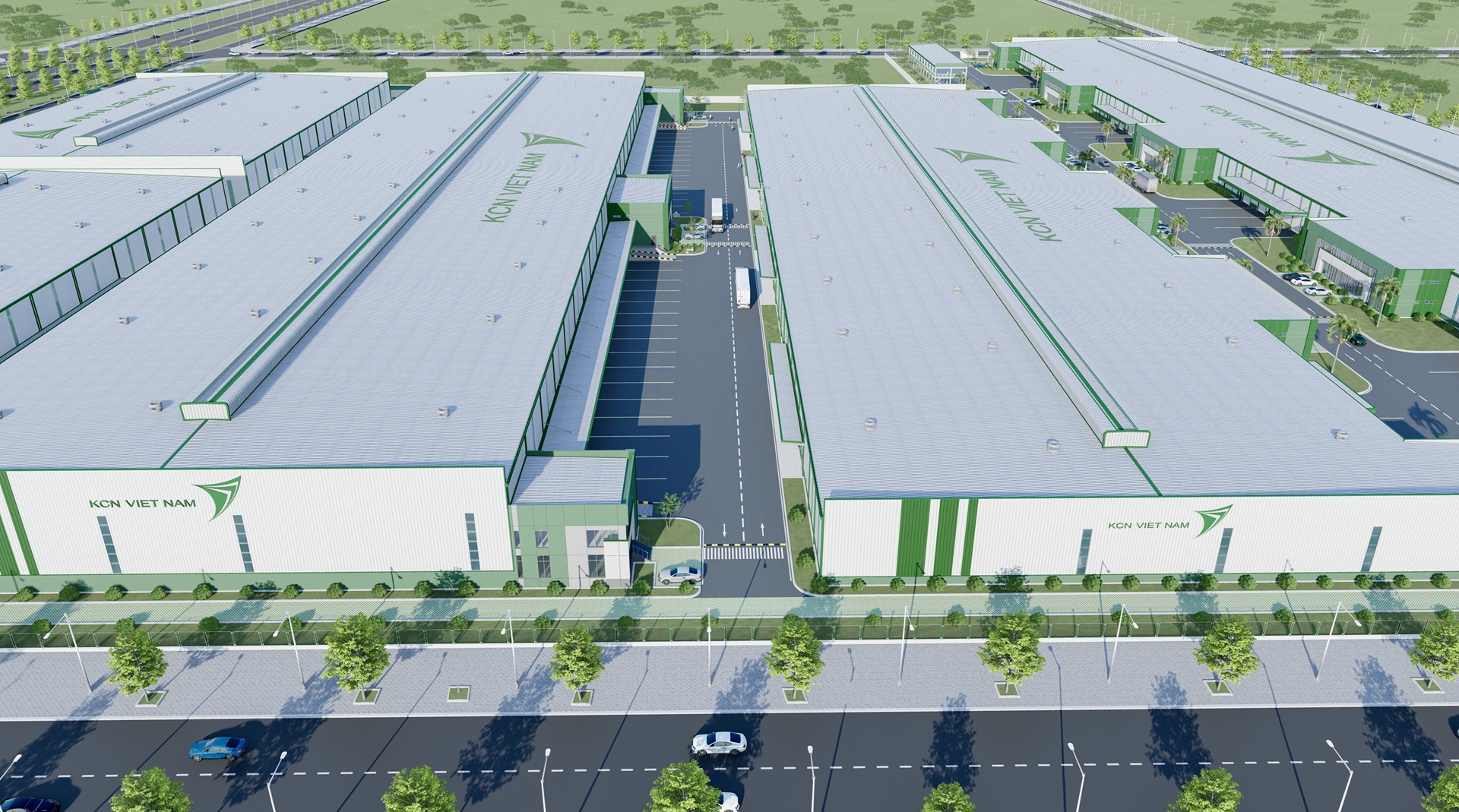
- Future-Proof Engineering: Every Ready-Built Factory and Warehouse in our portfolio is engineered to meet the strict clear-height, heavy floor-load, and spatial grid demands required by modern automated manufacturing systems.
- The Ultimate ESG Advantage: By providing solar-ready roofs, sustainable construction insulation, and complete local compliance with fire safety and environmental zoning frameworks, we eliminate administrative risk and deliver a significantly lower Total Cost of Ownership (TCO) for our global partners.
Conclusion
Succeeding in Vietnam’s dynamic industrial landscape requires aligning your operational footprint with where the market is going, not where it has been. Investing in advanced, sustainable, and highly connected infrastructure is the single best way to insulate your supply chain against global economic headwinds.
Is your manufacturing footprint prepared for the technical and environmental mandates of tomorrow? Contact KCN Vietnam today to secure a premium, high-spec industrial asset before regional occupancy bottlenecks tighten further.
KCN MANAGEMENT AND SERVICES JSC
HEADQUARTER
Level 10 – Saigon View,
117 Nguyen Cuu Van, Gia Dinh Ward,
Ho Chi Minh City, Vietnam
HANOI OFFICE
Suite 1812 – Charmvit Tower,
117 Tran Duy Hung, Yen Hoa Ward,
Hanoi, Vietnam
Hotline: 1900 0089
Tel: +84 28 7777 0089