What is Cross-Docking? The Zero-Inventory Strategy Transforming Logistics in Vietnam
In modern supply chain management, traditional warehousing faces a double-edged sword: industrial land values and inventory holding costs continue to climb, while consumer and B2B markets demand unprecedented delivery speeds. Storing goods for weeks or months is no longer just an operational habit – it is an expensive bottleneck.
To break this cycle, global logistics giants, e-commerce market leaders, and high-tech manufacturers are turning to a high-velocity fulfillment strategy: Cross-Docking.
By transforming warehouses from static storage vaults into dynamic transit hubs, cross-docking eliminates the dead time of inventory management. However, executing this model flawlessly requires more than just smart software; it requires a precision-engineered physical infrastructure.
1. Understanding the “No-Storage” Paradigm
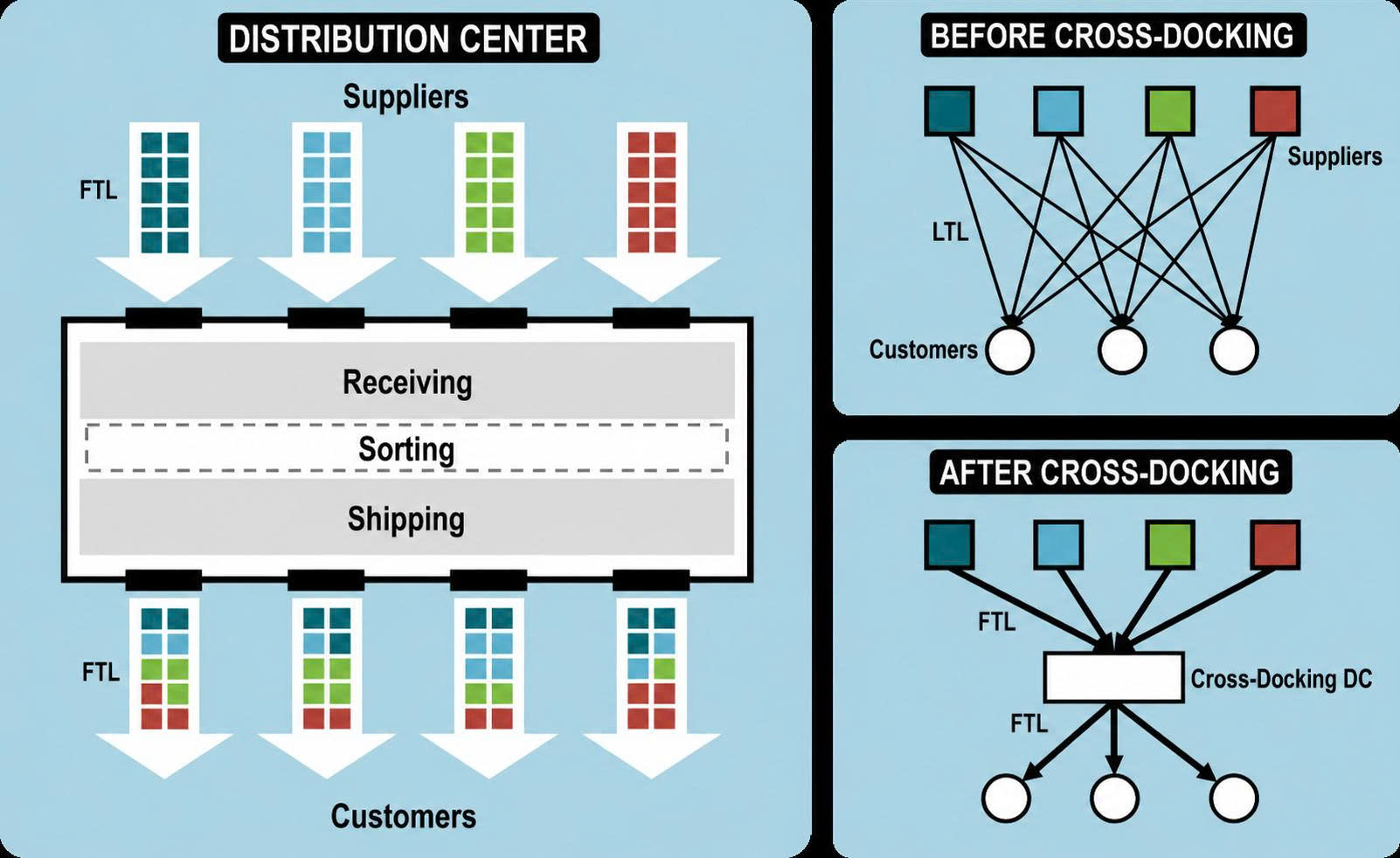
At its core, Cross-Docking is a logistics practice where products from an inbound supplier or manufacturing plant are transferred directly to an outbound transportation vehicle with minimal to zero intermediate storage or handling.
In a traditional setup, goods are received, logged, placed onto pallet racks, picked when an order arrives, packed, and then shipped. This cycle ties up working capital and slows down fulfillment.
Cross-docking completely bypasses the storage phase. Goods typically spend less than 24 hours inside the facility – frequently moving from the inbound dock to the outbound dock in a matter of hours or even minutes.
2. The Step-by-Step Cross-Docking Process Flow
While the concept sounds straightforward, the execution relies on synchronized timing and advanced technical tracking. Here is how a typical cross-docking sequence unfolds:
- Inbound Arrival: Inbound transport trucks, loaded with components or finished products from various suppliers, arrive at the facility’s designated incoming dock doors.
- Screening & Sorting: The cargo is unloaded. Warehouse personnel or automated sorting systems instantly scan the goods using barcodes or RFID tags linked to a centralized Warehouse Management System (WMS) to identify their final destination.
- Consolidation & Staging: The products are sorted and routed across the facility floor to the outbound staging area. Here, smaller shipments (Less-Than-Truckload or LTL) are grouped together based on geographic destination.
- Outbound Dispatch: The consolidated goods are immediately loaded onto waiting outbound vehicles (Full-Truckload or FTL) heading directly to retail outlets, manufacturing lines, or end consumers.
3. Major Types of Cross-Docking Models
Depending on your industry, cross-docking can be adapted to serve different supply chain functions:
- Manufacturing Cross-Docking: A strategy where a facility receives inbound raw materials or sub-assemblies from multiple vendors, sorts them, and immediately prepares them to feed a just-in-time (JIT) manufacturing line.
- Distributor/Retail Cross-Docking: This model consolidates inbound products from different manufacturers into a single, unified outbound truck bound for a specific retail store or distribution point. It is widely used by retail giants to minimize local store stock.
- Transportation Cross-Docking: Primarily utilized by third-party logistics (3PL) providers, this model merges smaller shipments from various clients traveling to the same region into a single truck to optimize transport costs and fuel efficiency.
4. The Compelling Benefits for Modern Enterprises
Adopting a cross-docking framework offers significant competitive advantages for businesses operating in fast-paced markets like Vietnam:
- Slashed Inventory Holding Costs: By eliminating long-term storage, enterprises save dramatically on warehouse footprint rentals, inventory insurance, and the labor costs associated with routine inventory management.
- Accelerated Delivery Velocity: Reducing transit stops dramatically shortens the “Go-to-market” timeline. This speed is a critical differentiator for time-sensitive sectors like electronics assembly, fresh groceries, and fast-fashion e-commerce.
- Minimized Product Damage: Every time a forklift moves a pallet into or out of a storage rack, the risk of accidental product damage increases. Cross-docking features fewer touchpoints, resulting in a lower probability of warehouse-inflicted defects.
5. Technical Requirements: What Makes a Warehouse “Cross-Dock Ready”?
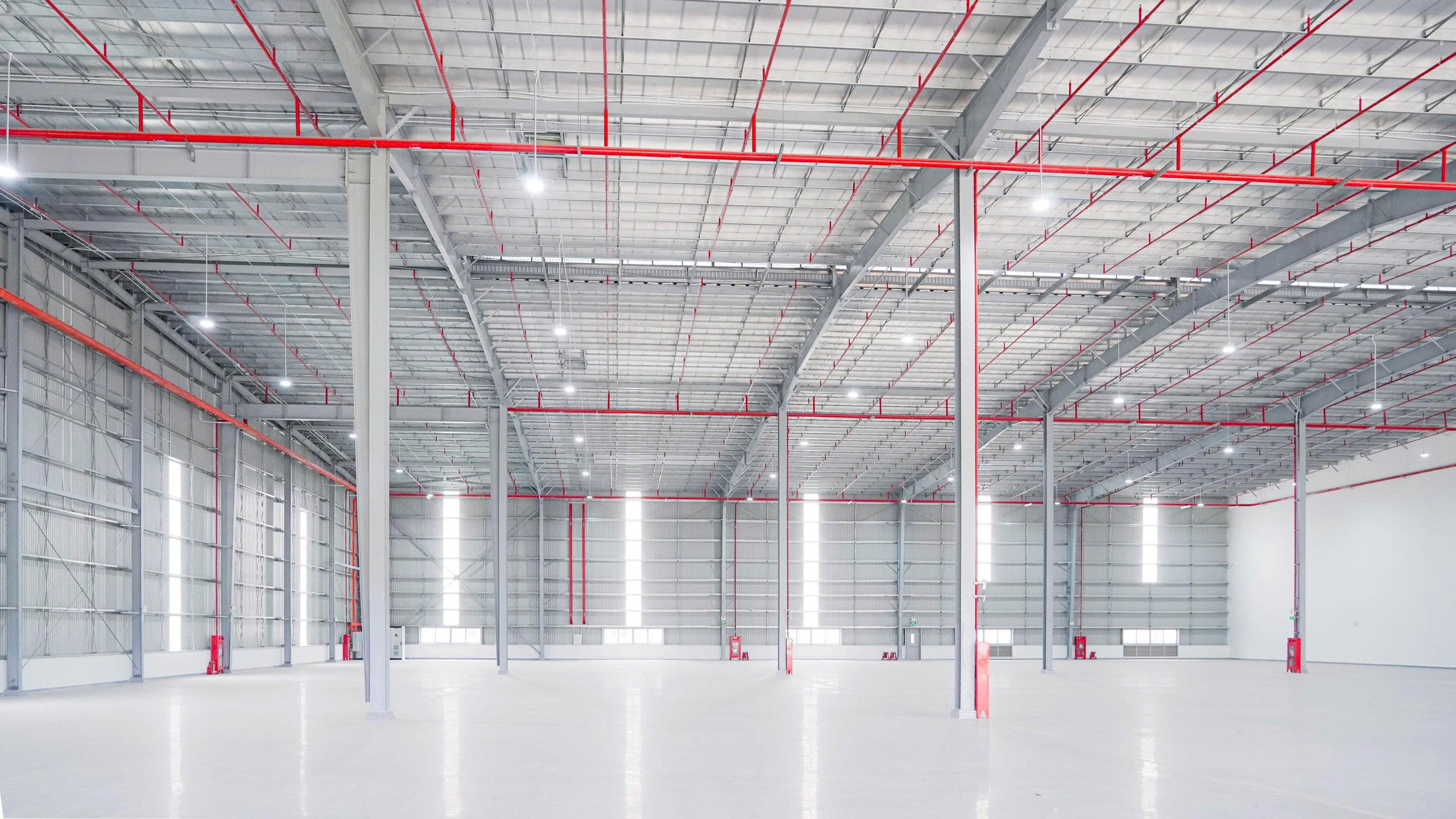
You cannot run a high-velocity cross-dock operation in a poorly configured space. A cross-dock facility is essentially a high-capacity sorting engine and requires specific architectural characteristics:
| Warehouse Feature | Technical Requirement for Cross-Docking |
| High Dock-to-Floor Ratio | Abundant inbound and outbound dock doors, typically organized in an “I”, “T”, or “H” building shape to maximize simultaneous truck loading and unloading. |
| Expansive Truck Aprons | Oversized concrete yards and wide turning radiuses to handle continuous, heavy-duty container truck rotations without yard gridlocks. |
| Excellent Clear Height | Ample overhead space to accommodate high-speed automated sorting conveyors, overhead scanning gantries, and optimal indoor ventilation. |
| Robust Floor Load Capacity | Heavy-duty, anti-dust concrete floors capable of withstanding constant, rapid forklift and pallet jack traffic. |
6. KCN Vietnam: Future-Ready Facilities Built for Speed
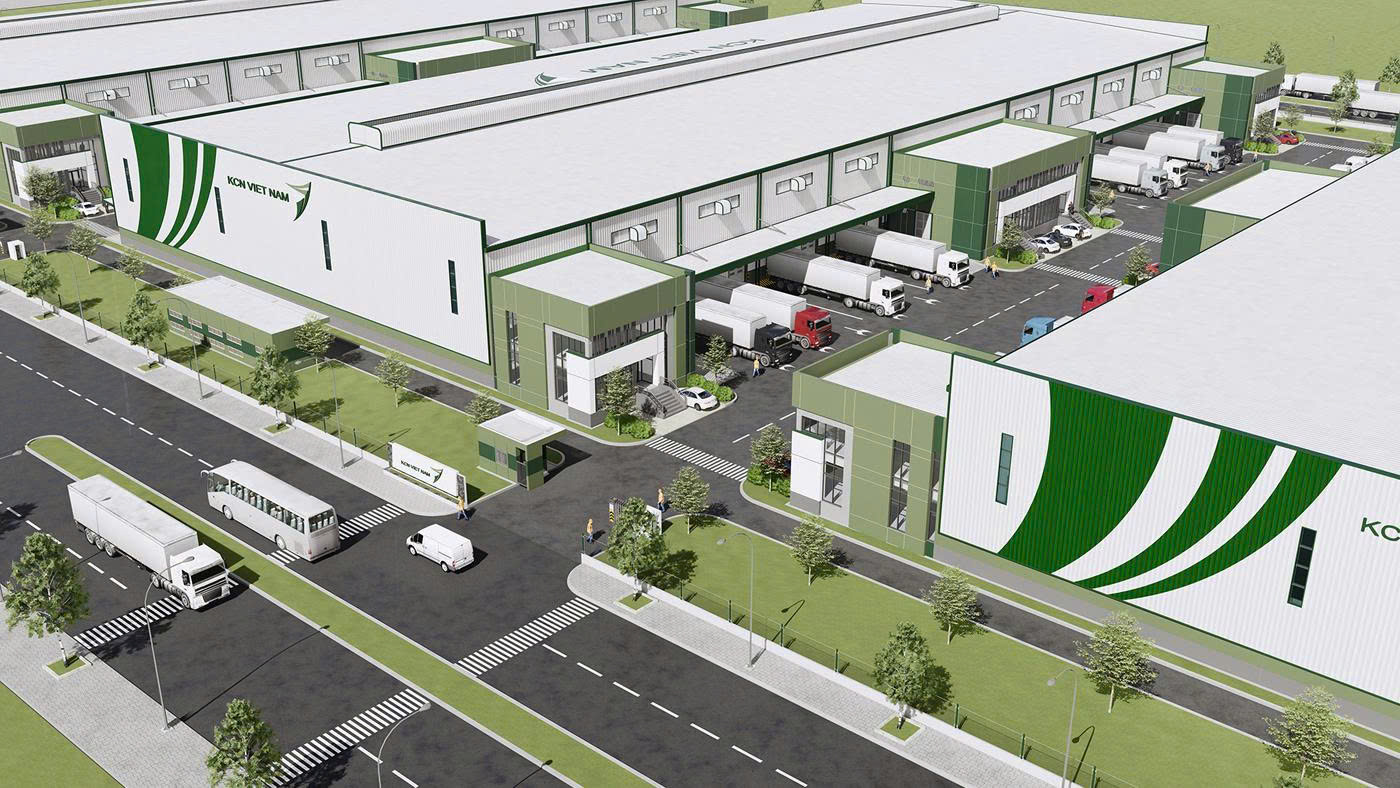
To unlock the full power of cross-docking, companies need strategically located facilities with premium technical specifications. KCN Vietnam provides the ideal foundation for high-velocity supply chains with our state-of-the-art Ready-Built Warehouses (RBW) and Ready-Built Factories (RBF).
Our industrial properties in major economic centers – such as Haiphong, Bac Ninh, Ho Chi Minh City, Dong Nai, and Long An – are deliberately situated next to key expressways and transit corridors, shaving critical hours off transportation legs.
Furthermore, our warehouse layouts offer high floor-load capacities of up to 3 tons/m², and excellent clear heights. These features provide the precise physical environment needed to install automated sortation systems and run continuous, high-efficiency cross-docking operations.
Conclusion
Cross-docking is an essential strategy for forward-thinking enterprises aiming to build lean, fast, and agile supply chains. By transforming static storage into a fluid, high-velocity transit system, you can reduce capital lock-up and delight customers with faster delivery times. Partnering with a premier industrial developer like KCN Vietnam ensures your logistics operations are anchored in a world-class facility designed to accelerate your growth.
KCN MANAGEMENT AND SERVICES JSC
HEADQUARTER
Level 10 – Saigon View,
117 Nguyen Cuu Van, Gia Dinh Ward,
Ho Chi Minh City, Vietnam
HANOI OFFICE
Suite 1812 – Charmvit Tower,
117 Tran Duy Hung, Yen Hoa Ward,
Hanoi, Vietnam
Hotline: 1900 0089
Tel: +84 28 7777 0089