10 Effective Factory Cooling Methods: Optimizing Productivity and Energy Savings for Enterprises
The scorching summer in Vietnam always poses a major challenge for factory and warehouse operations. Rising temperatures inside production areas not only significantly reduce worker productivity but also increase the risk of machinery overheating, causing assembly line disruptions and directly impacting the quality of stored goods.
Therefore, optimizing the cooling system is a vital task for every business. Below is a compilation of the 10 most effective factory cooling solutions today, categorized into strategic groups to help enterprises easily balance investment costs and operational efficiency.
1. Passive Cooling Solution
These solutions utilize physical principles and architectural design to reduce heat without consuming, or consuming very little, electricity.
- Method 1: Natural Ventilation System Design: Combining louvers at lower levels to intake cool air with skylights or roof monitors at higher positions. This mechanism creates natural air convection, pushing hot air upward and out of the facility.
- Method 2: Installing Roof Turbo Ventilators: Stainless steel eco-fans placed on the factory roof spin using natural wind power, continuously drawing out trapped hot air and heat pockets from the attic area.
- Method 3: Applying Heat-Reflective Thermal Barrier Coating for Roofs: Coating the metal roof surface with specialized heat-reflective paint can reduce the roof surface temperature by 10°C to 15°C , blocking thermal radiation from transferring into the space below.
- Method 4: Using Ceiling Thermal Insulation (Glasswool / Airbags): Installing Glasswool panels or reflective insulation airbags directly beneath the metal roof creates an effective shield against thermal energy.
2. Active & Technological Cooling Solutions
When heat generated from machinery and worker density is overwhelming, enterprises must intervene with active electromechanical systems.
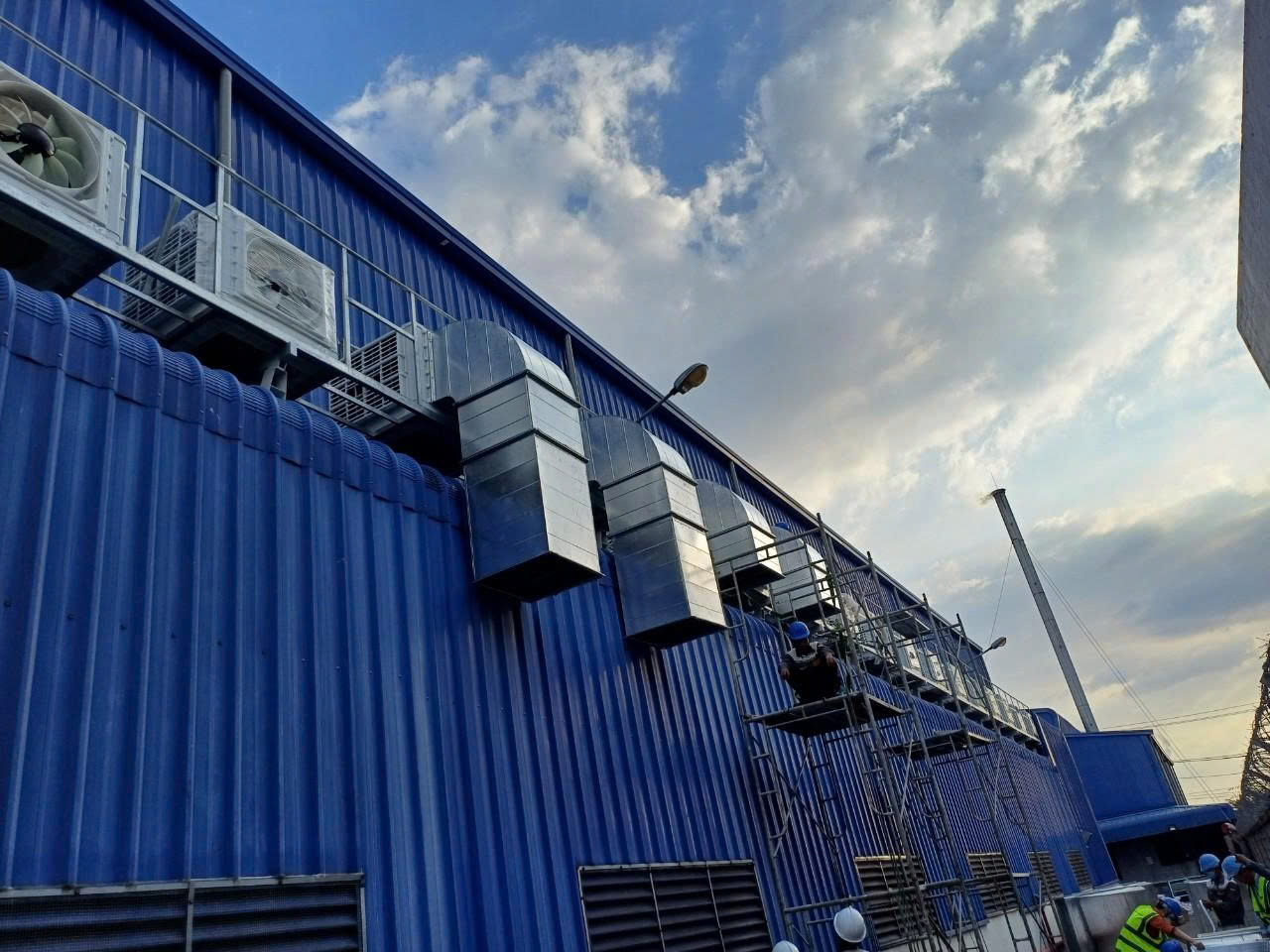
- Method 5: Negative Pressure Cooling System (Cooling Pad & Exhaust Fan): This system utilizes heavy-duty industrial exhaust fans at one end to pull hot air out, forcing fresh air to enter through the opposite end embedded with water-saturated Cooling Pads. The air temperature entering the factory can be reduced by 5°C to 9°C.
- Method 6: Positive Pressure Cooling System: Utilizing evaporative air coolers to blow chilled air (cooled via water processes) directly to worker stations through a network of air ducts.
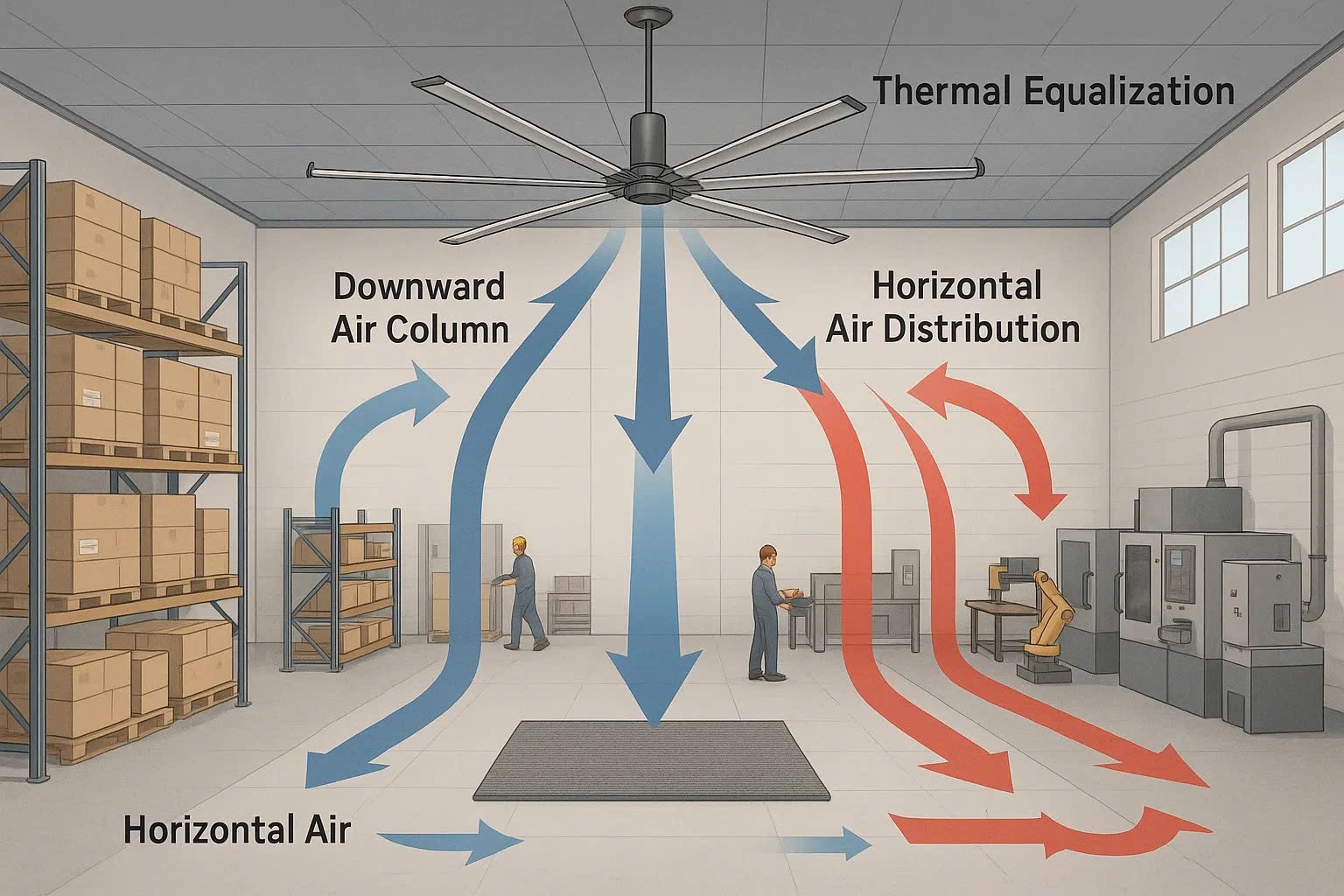
- Method 7: Installing High-Volume Low-Speed (HVLS) Fans: HVLS industrial ceiling fans with blade spans ranging from 3m to 7.3m move massive volumes of air at a slow speed, creating a natural breeze that cools a large area of the factory while remaining exceptionally energy-efficient.
- Method 8: Roof Misting System: Spraying fine water mist directly onto the metal roof rapidly cools the roof structure through the process of water evaporation.
- Method 9: Central Air Conditioning System (Chiller): The optimal and mandatory solution for specialized industries requiring absolute temperature and humidity control, such as semiconductor manufacturing, pharmaceutical cleanrooms, or medical equipment warehouses.
3. Sustainable Solutions
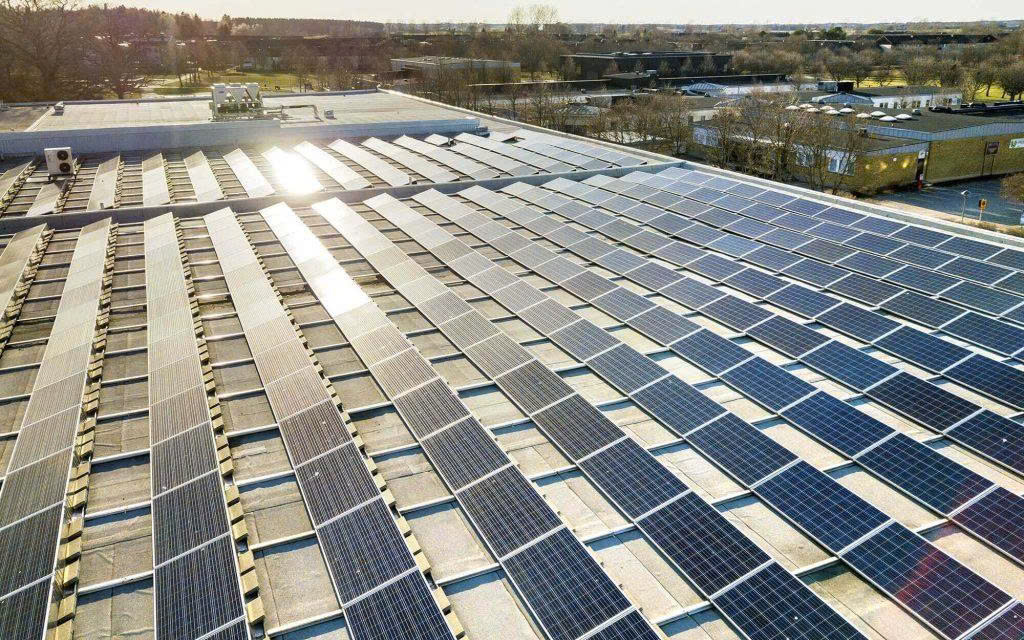
- Method 10: Installing Rooftop Solar Systems: This “2-in-1” solution is becoming a global trend. Solar panels absorb radiation, acting as a secondary shield protecting the metal roof from direct sunlight, visibly lowering the factory temperature beneath while generating clean energy for corporate operations.
Comparison Table of Common Cooling Solutions
| Criteria | HVLS Giant Ceiling Fans | Cooling Pad System | Central Air Conditioning (Chiller) |
| Initial Investment Cost | Medium | Medium | Very High |
| Operational Cost (Electricity) | Very Low | Low | High |
| Humidity Control Capability | No change to humidity | Increases relative humidity | Perfect humidity control |
| Industry Suitability | Logistics, mechanics, garments | Textiles, general assembly | Electronics, pharmaceuticals, food |
KCN Vietnam Infrastructure: Built for Comfort and Efficiency
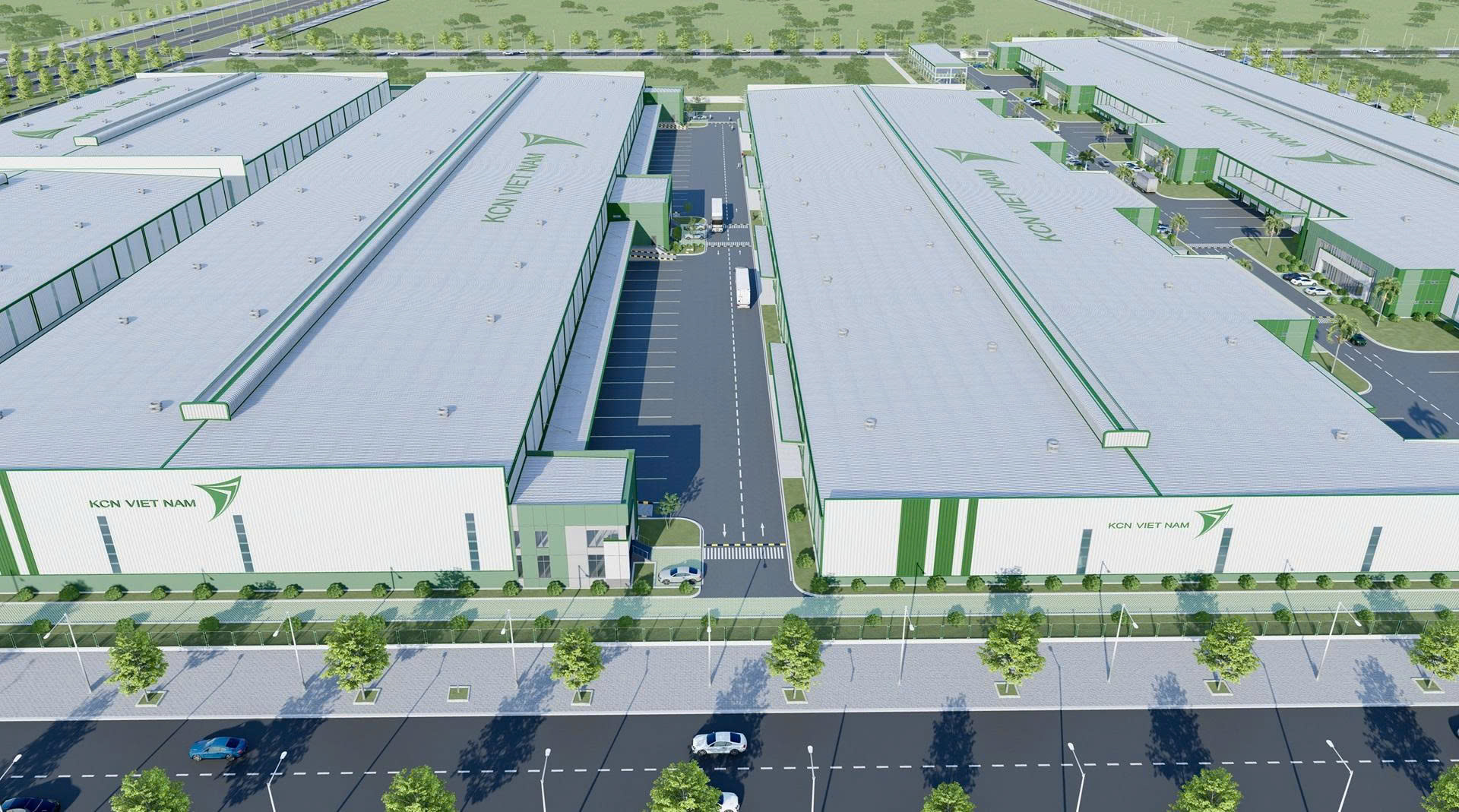
At KCN Vietnam, we understand that a cool and well-ventilated workspace is the foundation for businesses to achieve peak performance. Therefore, right from the planning and construction phases, our Ready-Built Factories (RBF) have integrated top-tier technical standards to self-regulate temperature:
- Ideal Clear Height: With outstanding clear height ceilings, KCN Vietnam’s factories create a vast air circulation space, allowing hot air to rise high above without affecting workers’ operating zones below.
- Premium Roof Insulation Materials: The entire metal roofing system is equipped with international-standard insulation layers, maximizing the prevention of solar heat radiation.
- Green Energy Ready: Our roof structures are meticulously engineered for load-bearing capacity to seamlessly accommodate rooftop solar installations, supporting enterprises in meeting stringent environmental and Environmental, Social, and Governance (ESG) criteria.
Conclusion
Factory cooling is not merely an operational expense; it is a strategic investment that protects people, safeguards assets, and enhances competitiveness. Choosing a factory with high-standard, built-in infrastructure from the start—such as those at KCN Vietnam—will alleviate energy cost burdens and sustain cooling system operations for the long term.
KCN MANAGEMENT AND SERVICES JSC
HEADQUARTER
Level 10 – Saigon View,
117 Nguyen Cuu Van, Gia Dinh Ward,
Ho Chi Minh City, Vietnam
HANOI OFFICE
Suite 1812 – Charmvit Tower,
117 Tran Duy Hung, Yen Hoa Ward,
Hanoi, Vietnam
Hotline: 1900 0089
Tel: +84 28 7777 0089