Automotive Spare Parts Warehousing: Technical Criteria for High-SKU Logistics in Vietnam
Vietnam’s automotive and motorbike sectors are experiencing a dramatic expansion. Driven by the arrival of global original equipment manufacturers (OEMs), tier-1 component suppliers, and significant local manufacturing milestones, the country has solidified its position as a vital manufacturing hub in Southeast Asia.
However, this industrial boom introduces an intricate logistical challenge: managing automotive spare parts. Automotive logistics involves orchestrating an immense volume of unique Stock Keeping Units (SKUs). A single facility might simultaneously house massive, heavy-duty iron engine blocks, highly sensitive microelectronic sensors, fragile body panels, and volatile lubricants.
Because of this extreme diversity in weight, size, and sensitivity, generic industrial real estate properties frequently fail to meet the structural and operational demands of the automotive supply chain. For international tier-1 suppliers and third-party logistics (3PL) providers, securing a highly specialized, technically compliant warehouse is critical to operational success.
1. Core Technical & Architectural Requirements
To maintain inventory integrity and prevent bottlenecking, an automotive warehouse must be built to uncompromising technical specifications.
Uncompromising Floor Load Capacity & Durability
Dense metal component racks, heavy transmission assemblies, and industrial machinery exert extreme localized pressure on a building’s foundation. Standard warehouse floors will crack or sink under these conditions.
Automotive facilities require heavy-duty reinforced concrete slab floors with a load capacity up to 3 tons/m². Furthermore, the concrete must undergo advanced anti-dust and anti-wear hardening treatments to withstand continuous, high-frequency forklift operations and heavy pallet jack traffic without generating abrasive particulate matter.
Maximum Clear Height for High-Density Vertical Storage
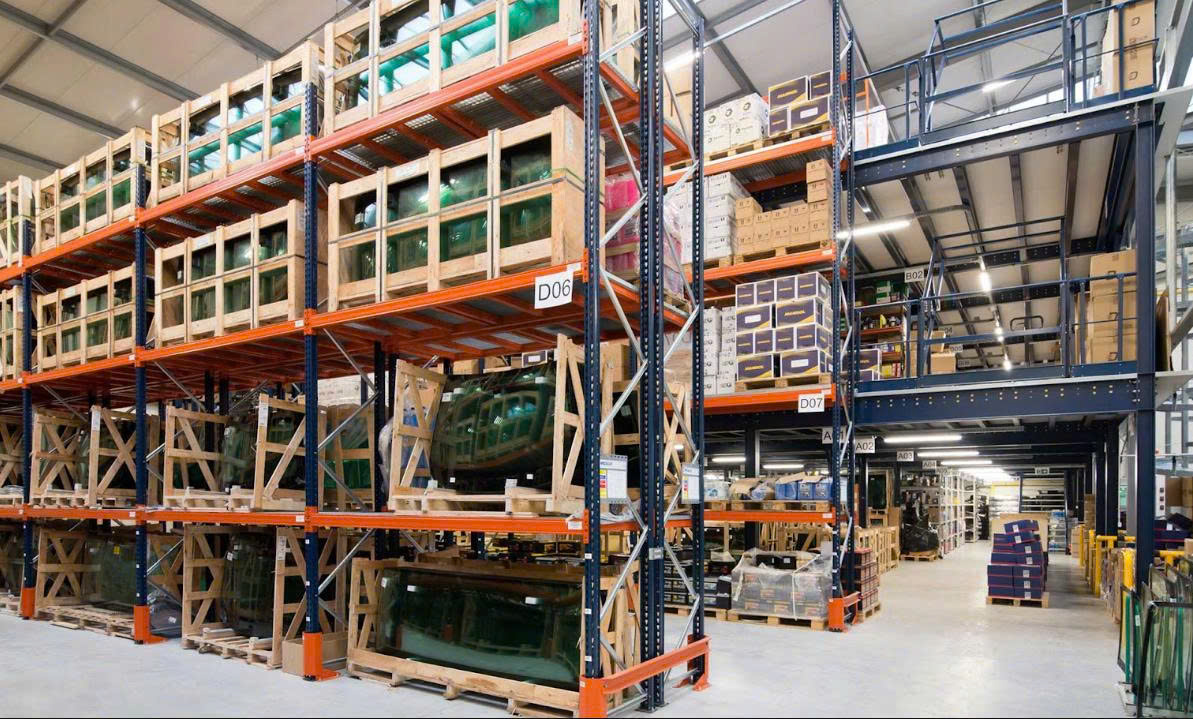
Managing thousands of distinct SKUs requires maximizing every cubic meter of space. To achieve high-density storage efficiency, facilities must be structurally compatible with advanced vertical racking architectures, such as Selective Racking, Mezzanine systems, or Very Narrow Aisle (VNA) configurations.
An optimal warehouse clear height of 9m to 10m is essential to allow logistics managers to scale upward rather than outward, significantly reducing the overall rental footprint cost.
Strict Atmospheric & Humidity Controls
Precision-engineered steel and iron components are highly susceptible to moisture-induced rust and oxidation, which can ruin a component before it ever reaches the assembly line. On the other hand, rubber components like drive belts, engine seals, and tires degrade and crack when exposed to extreme heat.
Maintaining a well-ventilated or ambient climate-controlled environment – ensuring relative humidity stays consistently below 60% – is a fundamental requirement for preserving product quality.
Advanced Fire Safety for Hazardous and Flammable Cargo
Automotive warehouses do not just store inert metal; they frequently hold volatile materials, including motorized lubricants, brake fluids, aerosol sprays, and massive volumes of highly combustible rubber tires and plastic interior trimmings.
Total compliance with the latest local fire prevention codes – specifically the rigid QCVN 06:2022 standard in Vietnam – is non-negotiable. Facilities must feature localized containment cells, automated fire barrier walls, and specialized fire suppression mechanisms engineered to handle chemical or oil-induced thermal events.
Oversized Loading Bays & Smooth Apron Yards
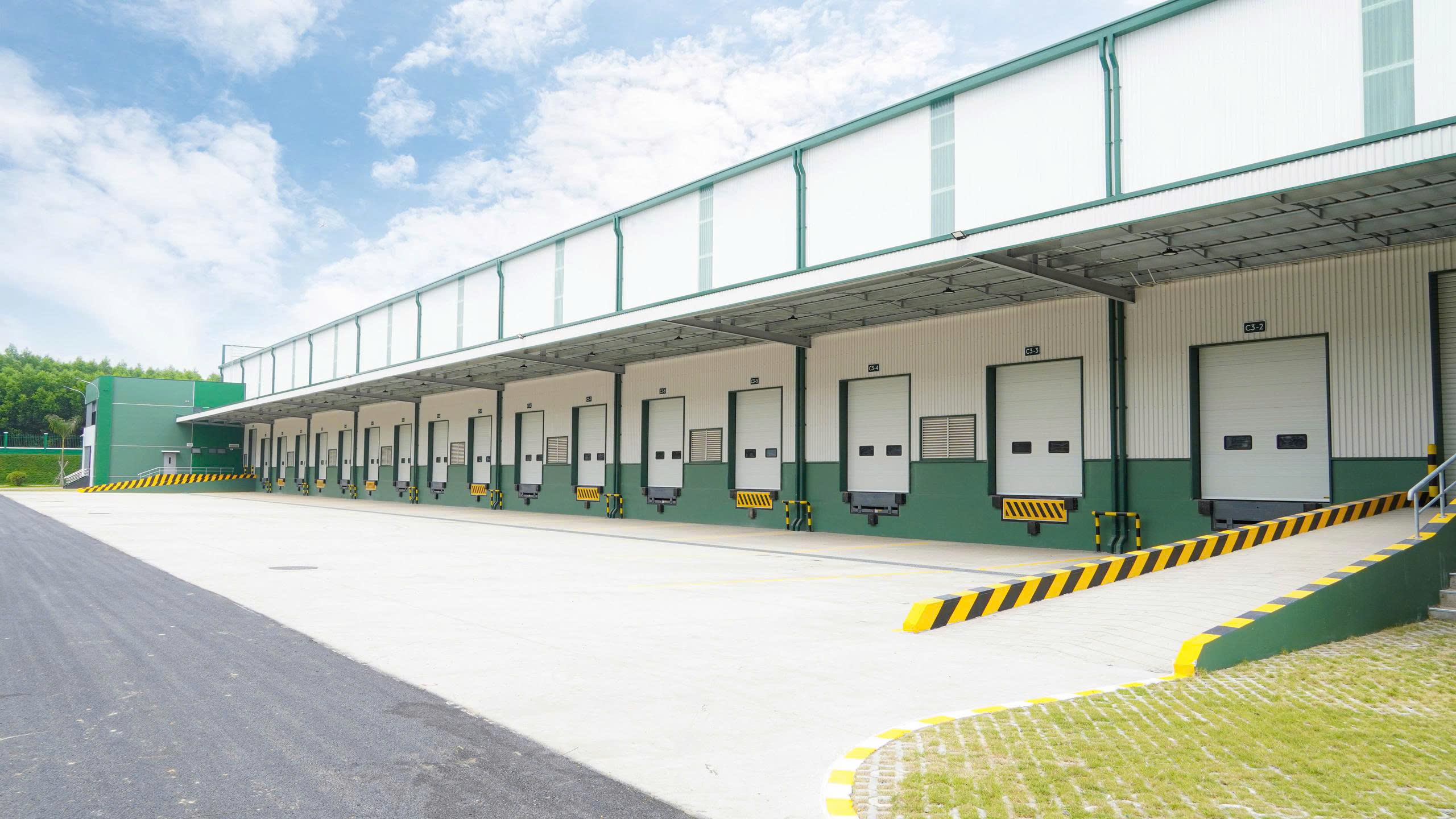
Automotive logistics relies on rapid turnover and the handling of irregularly shaped freight, such as full-size chassis components and body panels. The facility must feature an abundant array of automated dock levelers, weather-sealed dock shelters, and expansive concrete apron yards. Wide turning radiuses are critical to ensure that heavy container trucks and multi-axle freight carriers can maneuver, load, and rotate without causing yard gridlock.
2. Strategic Logistical Synchronization: JIT & JIS Ready
Modern automotive manufacturing leaves no room for delays. To minimize overhead and eliminate capital tied up in static factory inventory, assembly lines operate on Just-In-Time (JIT) and Just-In-Sequence (JIS) delivery models. Under these frameworks, components must arrive at the factory floor precisely when they are needed on the production line, down to the exact hour and sequence.
Consequently, an automotive parts warehouse cannot function in geographical isolation. It must operate as a seamless physical extension of the primary assembly plant. This operational rhythm demands immediate, unimpeded access to major expressways, deep-sea ports, and airport cargo terminals to ensure that inbound parts clear customs quickly and outbound shipments avoid urban transit bottlenecks.
3. Matrix: Storage Challenges vs. Infrastructure Solutions
| Specific Spare Parts Challenge | Potential Supply Chain Risk | Required Industrial Infrastructure Solution |
| Heavy casting & engine components | Floor cracking, structural sagging, rack instability | Reinforced concrete floor slab with up to 3 tons/m² load capacity. |
| Massive, diverse SKU counts | Inefficient picking, lost inventory, high footprint costs | 9m to 10m clear height compatible with vertical VNA racking. |
| Moisture-sensitive precision metals | Surface rust, component failure, rejection by OEMs | Industrial ventilation systems and ambient climate/humidity tracking. |
| Flammable fluids & rubber tires | Rapid fire spread, catastrophic facility damage | Full QCVN 06:2022 fire safety compliance with automated suppression. |
4. KCN Vietnam: Engineered for the Future of Automotive Supply Chains
As global tier-1 suppliers and logistics providers optimize their footprints, KCN Vietnam offers high-quality industrial real estate solutions engineered specifically to support high-performance automotive supply chains.
- Premium Structural Specifications: Our Ready-Built Warehouses (RBW) and Ready-Built Factories (RBF) deliver excellent clear heights, floor load tolerances up to 3 tons/m², and wide column spans.
- Prime Proximity to Major Automotive Hubs: KCN Vietnam’s assets are strategically positioned along major logistical corridors across Northern and Southern Vietnam, including Haiphong, Bac Ninh, Ho Chi Minh City, Dong Nai, and Long An. These strategic locations offer tenants seamless proximity to deep-sea container gateways, international airports, and established automotive assembly plants.
- Supporting Global Carbon-Neutral Directives: Leading automotive brands operate under strict international mandates to reduce supply chain emissions. KCN Vietnam’s commitment to sustainable construction practices and energy-efficient insulation helps tenants effortlessly achieve their corporate Environmental, Social, and Governance (ESG) targets.
Conclusion
Automotive spare parts logistics demands an industrial space that can seamlessly handle heavy weights, massive SKU counts, and rapid, synchronized rotation. By avoiding the limitations of generic properties and choosing a technically advanced, strategically located facility with a developer like KCN Vietnam, your enterprise gains a vital competitive advantage. Our world-class infrastructure provides the security, efficiency, and compliance needed to accelerate your automotive supply chain across the region.
KCN MANAGEMENT AND SERVICES JSC
HEADQUARTER
Level 10 – Saigon View,
117 Nguyen Cuu Van, Gia Dinh Ward,
Ho Chi Minh City, Vietnam
HANOI OFFICE
Suite 1812 – Charmvit Tower,
117 Tran Duy Hung, Yen Hoa Ward,
Hanoi, Vietnam
Hotline: 1900 0089
Tel: +84 28 7777 0089