Warehouse vs. Distribution Center: Strategic Insights for Supply Chain Optimization
.The global supply chain landscape has undergone a profound paradigm shift. Industrial logistics is no longer just about finding a quiet, passive space to store physical assets. Instead, it has transformed into a hyper-active, fast-moving environment where speed and order fulfillment accuracy dictate market dominance.
As multi-channel retail, B2B electronics, and e-commerce ecosystems expand across Southeast Asia, businesses face the critical task of structuring their physical footprints. However, an industry-wide point of confusion remains: many enterprises still use the terms Warehouse and Distribution Center interchangeably.
While both are industrial real estate structures that hold goods, their operational philosophies, interior designs, technology layers, and locations are fundamentally different. Choosing the wrong asset class can lead to severe bottlenecks and unnecessary overhead costs.
1. What is a Warehouse? (The Storage Fortress)
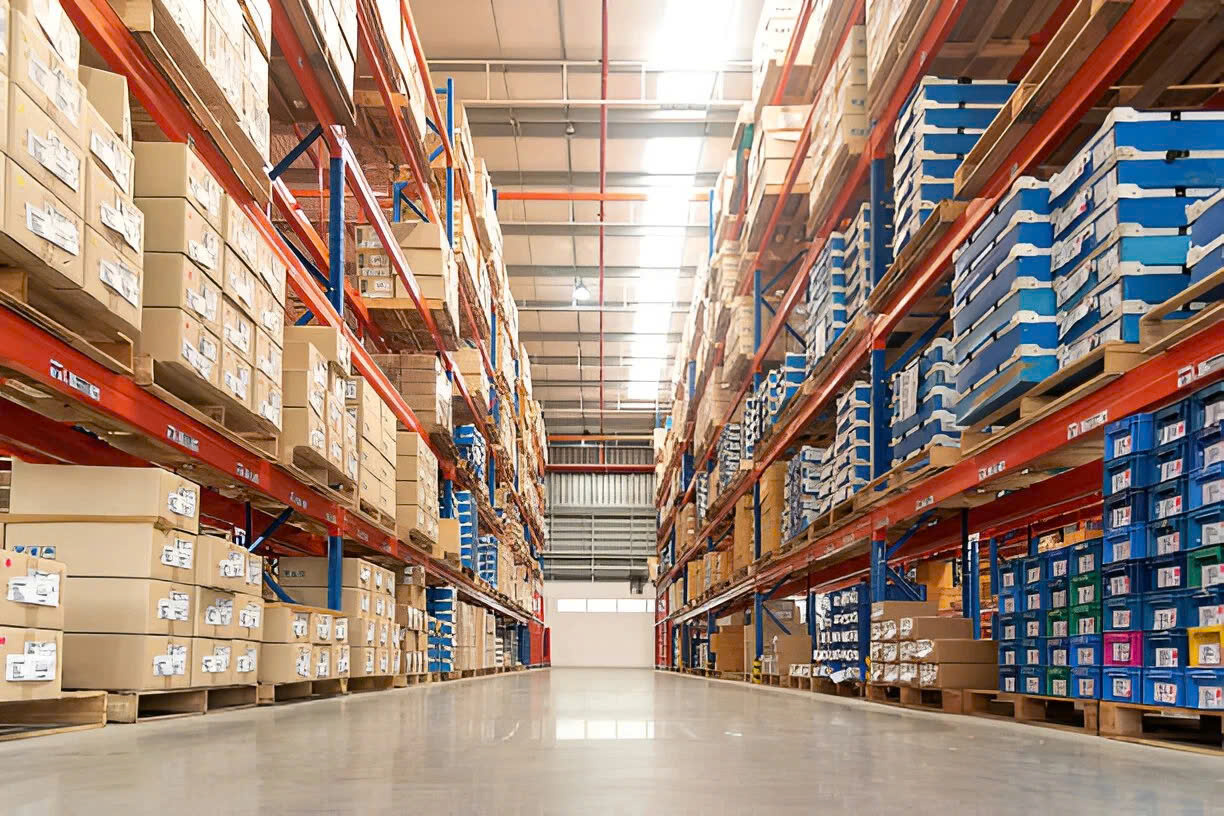
A traditional warehouse is primarily designed as a secure, long-term storage facility for raw materials, semi-finished goods, or bulk finished products. Its core objective is asset preservation and space maximization.
Key Characteristics
- Focus on Capacity: Success is measured by maximizing cubic storage capacity (m3) and optimizing pallet density through deep vertical racking networks, such as Selective or Very Narrow Aisle (VNA) systems.
- Lower Inventory Velocity: Goods enter the facility and may sit undisturbed for weeks, months, or quarters depending on production cycles or seasonal inventory accumulation.
- Basic Operational Flow: The interior rhythm is straightforward and linear: inbound receiving, static put-away, long-term holding, and eventual retrieval for shipping.
2. What is a Distribution Center? (The Flow Engine)
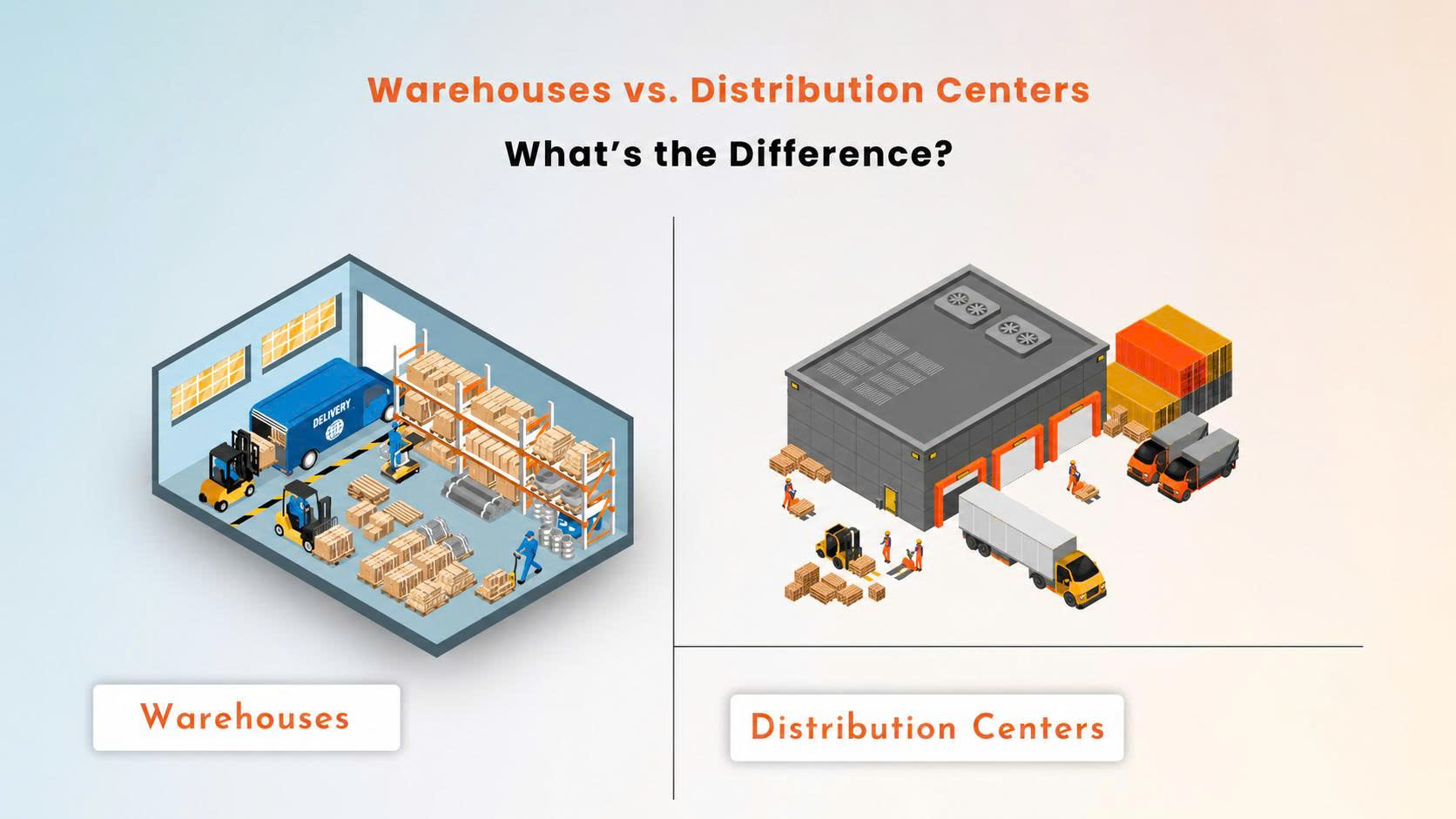
In contrast, a distribution center (DC) is a customer-centric, velocity-driven hub designed to serve as an active transit engine. Its primary goal is not to hold inventory, but to process and move it to end-consumers, retail outlets, or downstream manufacturing facilities as quickly as possible.
Key Characteristics
- Focus on Throughput: Success is determined by order fulfillment speed, inventory turnover rates, and picking accuracy.
- Dynamic Space Allocation: Instead of being packed with static pallet racks from wall to wall, a distribution center features broad, open staging floors situated directly behind dock doors to facilitate instant cross-docking, fluid sorting, and temporary staging.
- Value-Added Services (VAS): A modern DC acts as a customization hub, frequently executing complex operations such as product kitting (bundling multiple distinct items together), item labeling, promotional repackaging, and handling reverse logistics (returns).
3. The Core Differences: Warehouse vs. Distribution Center
Storage Duration & Flow
A warehouse acts as a reservoir, intentionally accumulating inventory to hedge against supply chain disruptions or to secure volume discounts on raw materials. A distribution center acts as a river; it thrives on rapid circulation, aiming to receive, process, and dispatch items within hours or days to keep holding costs near zero.
Operational Complexity
While a warehouse focuses on basic pallet-in and pallet-out tracking, a distribution center manages multi-channel order fulfillment. A single day’s itinerary at a DC can involve managing hundreds of split-case orders, sorting loose parcels via automated conveyors, and re-routing cargo directly from inbound container trucks to regional delivery vans.
Customer Proximity & Location
Traditional storage warehouses are frequently built near resource origins, ports, or heavy manufacturing zones where land costs are lower. Distribution centers, however, are strategically positioned near major metropolitan consumption hubs and primary transportation networks to minimize transit times and cut down last-mile delivery costs.
4. Comparison Matrix: Structural & Operational Realities
| Operational Parameter | Traditional Warehouse | Modern Distribution Center |
| Primary Goal | Asset preservation & storage density | Flow velocity & rapid order fulfillment |
| Average Holding Cycle | Weeks, months, or quarters | Hours to days maximum |
| Value-Added Services | Minimal to none | High (Kitting, labeling, repackaging, returns) |
| Internal Floor Layout | Narrow aisles with dense racking rows | Broad staging lanes, automated sorting paths |
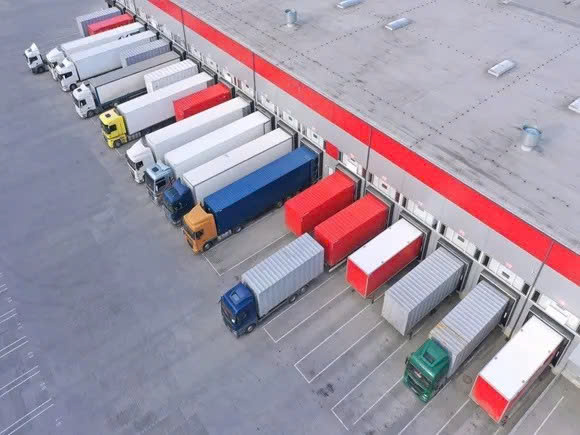
| External Yard Needs | Standard container parking and docking | Oversized concrete yards for continuous truck rotation |
| Technology Integration | Standard Warehouse Management (WMS) | Advanced Warehouse Execution Systems (WES) & AGVs |
5. Technical Facility Demands for a High-Velocity DC
Converting a generic industrial building into a high-performance distribution center is an engineering challenge. Because a DC relies on continuous movement, it requires specific technical capabilities:
- Super-Flat Flooring & Exceptional Load Bearings: Continuous traffic from high-speed forklifts, reach trucks, and automated guided vehicles (AGVs) demands seamless, super-flat floor slabs. The flooring must have a load capacity of up to 5 tons/m² and be treated with anti-dust hardeners to prevent industrial wear and tear.
- Power Grid Redundancy for High Automation: Distribution centers increasingly rely on automated cross-belt sorters, high-speed conveyor belts, RFID scanning tunnels, and climate-tracking mechanisms. These systems run 24/7, making a high-capacity power infrastructure and robust backup generator setups absolute necessities.
- Unimpeded Logistics Geometry: To accommodate advanced material handling equipment and fast-moving transit pathways, the facility layout must feature wide column spans and excellent clear heights to prevent physical structures from blocking automated sortation flows.
6. KCN Vietnam: Future-Proof Foundations for Next-Generation Logistics
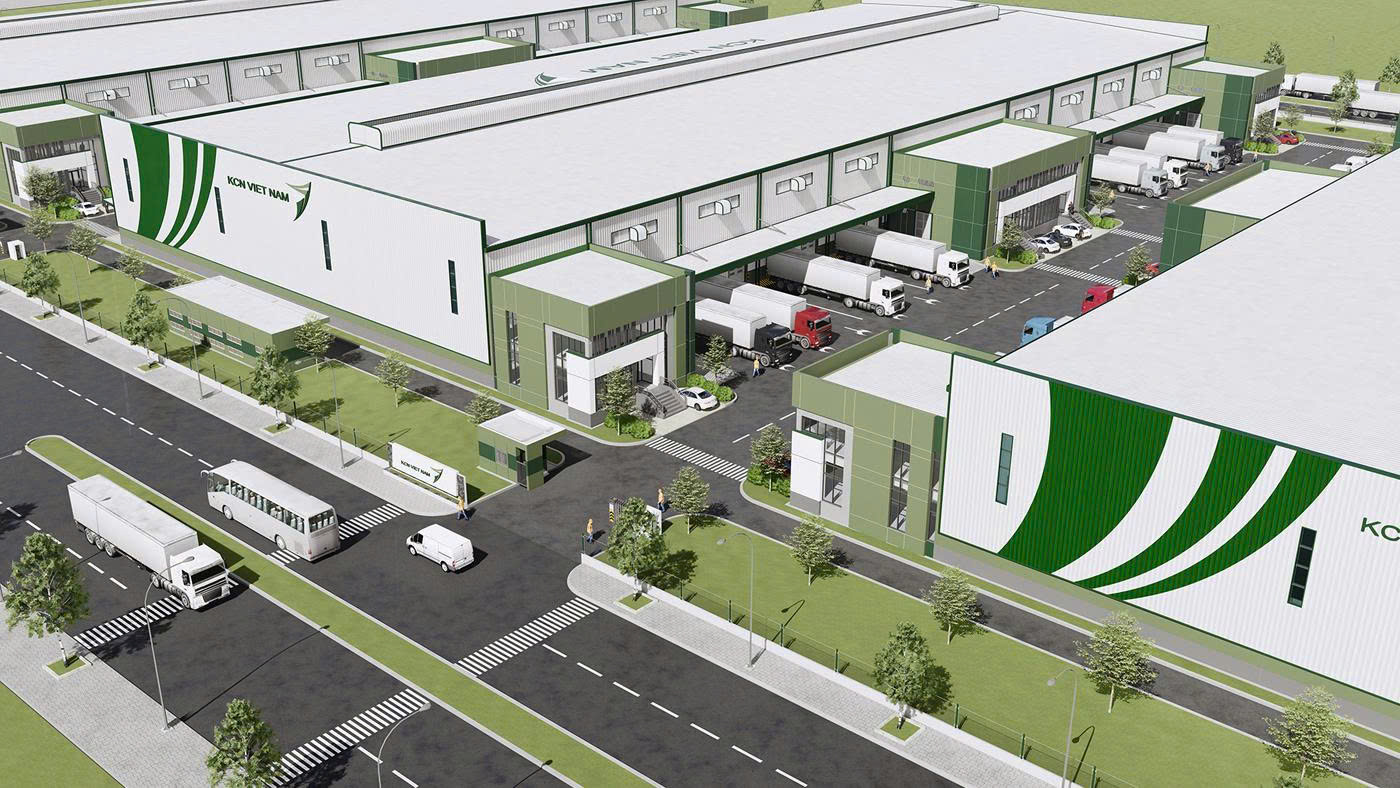
Whether your business model requires a secure, heavy-duty storage warehouse or a hyper-automated, high-velocity distribution center, KCN Vietnam delivers world-class industrial real estate solutions designed to scale your operations.
Our premium Ready-Built Warehouses (RBW) and Ready-Built Hybrids (RBH, Factory with Warehousing solutions) across Vietnam’s primary economic zones – including Haiphong, Bac Ninh, Ho Chi Minh city, Dong Nai, and Tay Ninh – are engineered to meet international technical standards. With floor load tolerances of up to 3 tons/m², optimized clearance heights, and flexible structural spans, our properties allow occupiers to easily configure dense vertical racking networks or install advanced automated sorting infrastructure.
Conclusion
Choosing between a warehouse and a distribution center depends entirely on your supply chain velocity and long-term business goals. If your priority is long-term storage and asset preservation, a traditional warehouse is your ideal fortress. If your focus is rapid fulfillment, multi-channel distribution, and speed-to-market, an advanced distribution center is your ultimate growth engine. Partnering with a professional property developer like KCN Vietnam ensures your logistics network sits on a compliant, technically superior foundation built for long-term success.
KCN MANAGEMENT AND SERVICES JSC
HEADQUARTER
Level 10 – Saigon View,
117 Nguyen Cuu Van, Gia Dinh Ward,
Ho Chi Minh City, Vietnam
HANOI OFFICE
Suite 1812 – Charmvit Tower,
117 Tran Duy Hung, Yen Hoa Ward,
Hanoi, Vietnam
Hotline: 1900 0089
Tel: +84 28 7777 0089